FleetPanda is now SOC 2 Compliant! Learn More →


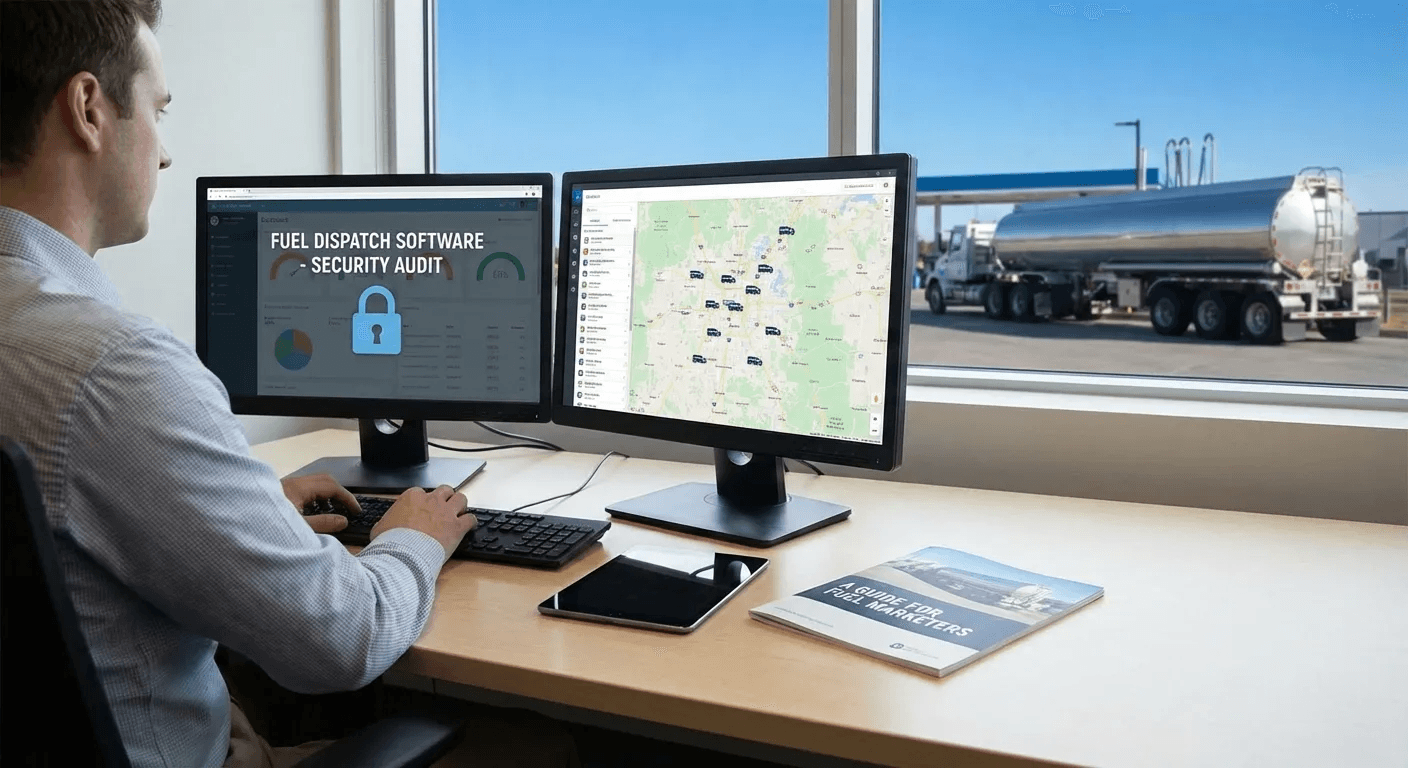
Your fuel dispatch software handles some of your most sensitive business information: customer lists, pricing structures, delivery routes, driver data, and billing records. As fuel marketers increasingly move operations to cloud-based platforms, understanding what to look for in software security has become a critical part of vendor evaluation.
This guide breaks down the key security considerations you should assess when choosing or evaluating your dispatch software.
The Data at Stake
Consider what lives inside your dispatch system on any given day. Customer names, addresses, and contact information. Pricing agreements and margin structures that took years to negotiate. Delivery schedules that reveal your operational capacity. Driver information including routes and schedules. Payment and invoicing data tied to your cash flow.
This information represents both your competitive advantage and your liability. A security incident could expose proprietary pricing to competitors, compromise customer trust, or disrupt operations during your busiest season. The fuel distribution industry may not face the same regulatory scrutiny as healthcare or finance, but the business consequences of a data breach are equally severe.
Key Security Features to Evaluate
When assessing any fuel dispatch software, you should examine several technical and operational security measures.
Data Encryption
Your data should be encrypted both in transit and at rest. Encryption in transit (using TLS 1.2 or higher) protects information as it moves between your browser, the mobile app, and the software's servers. Encryption at rest protects stored data from unauthorized access even if someone gains physical access to the storage systems.
Ask vendors specifically what encryption standards they use and whether encryption applies to all data types, including uploaded documents, BOL images, and customer signatures captured in the field.
Access Controls
Role-based access control ensures that users can only see and modify information relevant to their job function. Your dispatchers need different access than your billing team, and both need different access than your drivers. Strong access controls follow the principle of least privilege: users get the minimum access required to do their work.
Beyond role definitions, look for audit trails that log who accessed what data and when. These logs become critical if you ever need to investigate an incident or demonstrate compliance to a customer.
Authentication Requirements
Multi-factor authentication (MFA) adds a second verification step beyond passwords. Even if a password is compromised, MFA prevents unauthorized access without the second factor, typically a code sent to a phone or generated by an authenticator app.
Ask whether MFA is required for all users or only administrators, and whether it applies to both web and mobile app access.
Infrastructure and Hosting
Cloud-based software runs on infrastructure provided by companies like Amazon Web Services (AWS), Google Cloud, or Microsoft Azure. These major cloud providers invest billions in physical security, redundancy, and compliance certifications that would be impossible for individual software companies to match.
When evaluating vendors, ask where your data is hosted, what uptime guarantees exist, and how backups are handled. A reputable vendor should be able to explain their infrastructure choices clearly.
Vulnerability Management
Software security requires ongoing vigilance. Ask vendors how often they conduct vulnerability scans, how quickly they patch identified issues, and whether they engage third parties for penetration testing. Security threats evolve constantly, and your vendor's security practices should evolve with them.
Incident Response
Even with strong preventive measures, security incidents can occur. Ask potential vendors whether they have a documented incident response plan, how quickly they would notify you of a breach, and what their process is for containing and remediating issues.
Understanding SOC 2: The Industry Standard for Software Security
As you evaluate vendors, you may encounter references to SOC 2 compliance. Understanding what this means can help you assess security claims more effectively.
SOC 2 (System and Organization Controls 2) is a security framework developed by the American Institute of CPAs (AICPA). It establishes criteria for how cloud software companies should protect customer data across five areas: Security, Availability, Processing Integrity, Confidentiality, and Privacy.
What makes SOC 2 meaningful is that compliance requires examination by an independent CPA firm. The auditor reviews actual systems, policies, and controls rather than relying on the vendor's self-assessment. Think of it as a safety inspection conducted by licensed experts who specialize in evaluating software security.
Why SOC 2 Matters for Fuel Marketers
For most fuel distribution operations, SOC 2 provides a reliable indicator that a vendor takes security seriously. The examination process requires significant investment in security infrastructure, policies, and ongoing monitoring. Vendors who pursue SOC 2 are demonstrating commitment beyond marketing claims.
Additionally, as fuel marketers pursue larger commercial and industrial accounts, those customers increasingly ask about vendor security practices. Having dispatch software with SOC 2 compliance gives you a clear answer when those questions arise.
FleetPanda recently completed its SOC 2 Type 1 examination, with an independent CPA firm verifying that our security controls meet industry standards. This examination covered access management, data encryption, change management, vendor oversight, incident response, and system monitoring across both our web and mobile applications.
Questions to Ask Any Dispatch Software Vendor
When evaluating security, consider asking the following questions:
Where is customer data stored, and what cloud infrastructure do you use?
Is data encrypted in transit and at rest? What encryption standards do you use?
Do you require multi-factor authentication for system access?
How do you control access to different parts of the system based on user roles?
Have you completed a SOC 2 examination? If so, what type?
How often do you conduct vulnerability scans and penetration tests?
What is your incident response process, and how quickly would you notify customers of a breach?
How often do your employees complete security training?
What happens to my data if I decide to leave the platform?
A vendor who takes security seriously will answer these questions directly and provide documentation to support their claims.
Security as an Ongoing Commitment
Software security requires continuous attention. Threats evolve, and security practices must evolve with them. Look for vendors who view security as an ongoing responsibility rather than a one-time checkbox.
This means regular security training for employees, periodic reviews of access controls, continuous monitoring for suspicious activity, and annual re-examination of security controls. Vendors who invest in these practices are protecting your business alongside their own.
Making Security Part of Your Evaluation
Security may not be the most exciting aspect of dispatch software evaluation, but it deserves serious attention. The data you entrust to your dispatch platform represents years of customer relationships, operational knowledge, and competitive positioning.
By understanding what to look for and asking the right questions, you can make informed decisions that protect your business as you grow.