FleetPanda is now SOC 2 Compliant! Learn More →



Think about how an order actually reaches your dispatcher when a sales rep takes it.
A customer calls the rep directly, because the rep is the person they know. The rep is on the road, so he writes it on whatever is in the truck. Ship-to, product, gallons, and the gate code the customer mentions in passing. Then he calls the office. Dispatch is on another line, so he leaves a voicemail and hopes the gallons come through clearly.
Two hours later the customer calls the rep back. They want 1,500 instead of 1,000. Second call to the office.
Next morning the customer calls again asking where the truck is. The rep does not know, so he calls the office a third time, gets an answer, and calls the customer back.
One order. Four phone calls, a note that had to be keyed in by somebody else, and a change that may or may not have reached the driver in time.
Now think about who else in your business works this way. Your dispatcher has a board. Your drivers have an app. Your billing team has BOLs syncing to the back office. Your customers might have a portal. The sales rep has a notepad and the office's phone number.
That is the gap we set out to close.
Introducing the FleetPanda Sales App
The Sales App lets your sales reps create fuel delivery orders, extraction orders, and leased asset orders from their phones, and follow every one of them through to delivered gallons.
The order goes in once, by the person who took the call, and it reaches your dispatcher complete.
How It Works
The rep writes the order on their phone
The app walks through the same fields the office uses on the web. Customer and ship-to, the assets being filled, gallons for each one, requested date and time frame, PO, site contact, and delivery notes for gate codes or access instructions. Reps can start from a customer record, from a specific asset, or from the orders screen.
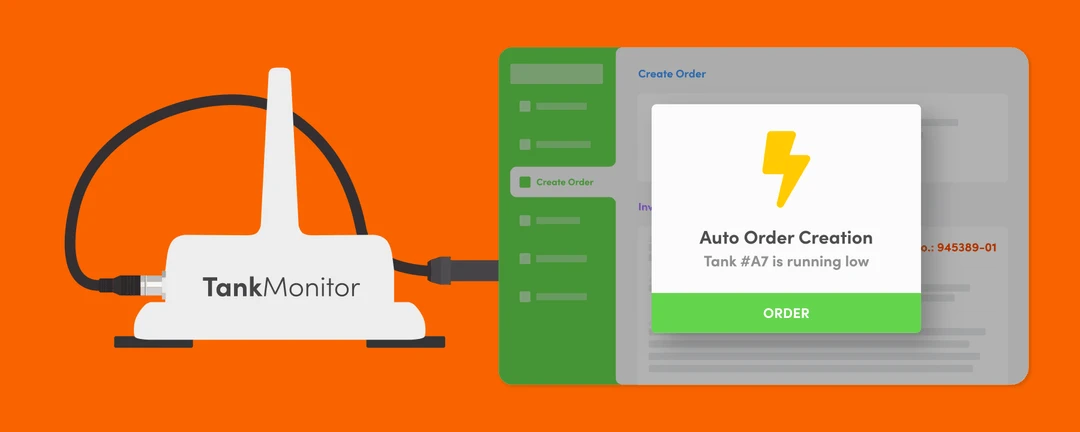
If the asset has a tank monitor linked, the rep sees the current level and when it was last read while they build the order.It reaches dispatch with no handoff
The order drops into the dispatcher's Order Well as Unassigned the moment the rep hits create. No voicemail, no email, no note that somebody has to type up later. Your dispatcher plans it like any other order.The rep fixes changes themselves
When the customer calls back to move a date or raise the quantity, the rep opens the order and makes the change directly, as long as the order is still Unassigned or Assigned. The correction happens at the source, before the truck rolls.Status stays visible to the rep
Unassigned, Assigned, In Progress, Completed. The rep can see where any order they wrote is sitting without calling the office. When a customer asks where the truck is, they have the answer in about ten seconds.The order closes with the numbers on it
Completed orders show ordered against delivered gallons, so the rep can confirm exactly what was dropped without chasing a BOL.
Lease Orders Work the Same Way
Reps can also write leased asset orders in the field, walking through ship-to, product, tank size, average load size, and lease duration.
Once it is submitted, the matching order generates on the LEM platform automatically, including fees and peripherals where those are configured. Your lease manager picks up a record that is already filled in rather than rebuilding it from an email.
What Changes for Your Business
The order loop stops living in email. Orders, changes, and status questions all run through one app. Nothing written in the field gets hand-keyed into FleetPanda later, and nothing gets lost between the rep and the office.
Dispatch plans from a clean order. The guided flow collects the site contact, the PO, and the access notes before the order can be submitted. Dispatchers stop rebuilding orders from voicemails and stop calling reps back for the detail that was missing.
Your office stops relaying. Customer service and dispatch spend part of every day answering questions that only exist because the rep could not see the order. Give reps their own view and those calls go away.
The Bottom Line
Fuel distribution software has been built around dispatchers, drivers, and back office teams for a long time. The sales rep, who usually takes the first call from the customer, has been left with a phone and a notepad.
The Sales App puts the order in their hands and keeps it there through delivery.
If you want to see it running, book a demo with the team.